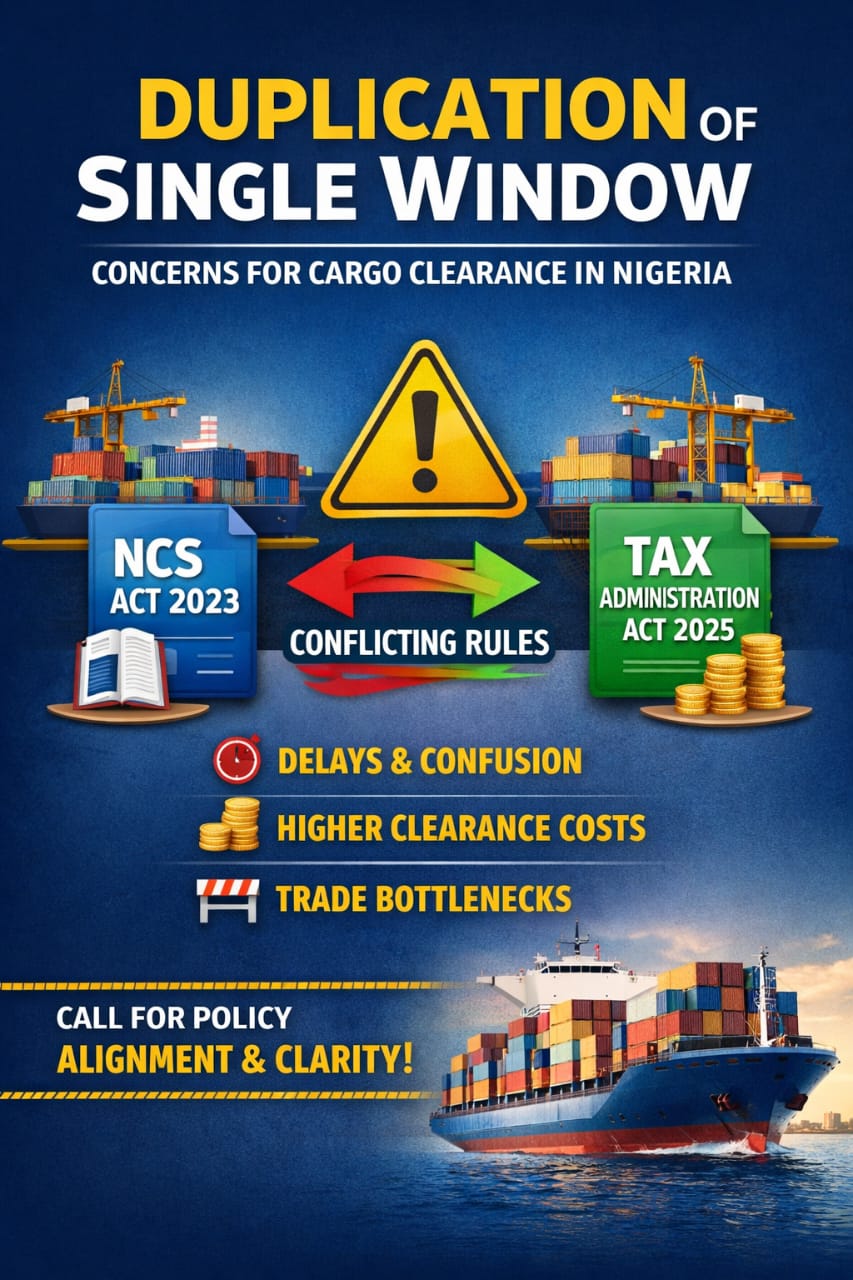
Concerns are mounting within Nigeria’s maritime and logistics industry following reports of duplication in the implementation of the National Single Window system. Licensed customs agents have raised alarms that overlapping provisions within existing laws may become a serious obstacle to efficient cargo clearance across Nigerian ports.
The Core Issue: Policy Overlap
- At the center of the concern is the duplication of the Single Window framework in both:
– The Nigeria Customs Service Act (2023)
– The Tax Administration Act (2025)
According to industry stakeholders, this overlap creates uncertainty around operational control, responsibilities, and implementation structure. Customs agents argue that instead of simplifying trade processes, the duplication could introduce confusion and inefficiencies within the system.
The Efficience Of The National Single Window
- The National Single Window is designed as a centralised digital platform where importers, exporters, and regulatory agencies can:
– Submit trade documentation electronically
– Process approvals
– Make payments
– Exchange data seamlessly
Ideally, it should function as a one-stop solution to reduce delays and improve transparency in cargo clearance. In fact, existing provisions within the Nigeria Customs framework already assign the Nigeria Customs Service as the lead agency responsible for coordinating this system.
Stakeholders Are Concerned
- Industry leaders, including representatives of licensed customs agents, have warned that the current duplication could:
– Create multiple points of control
– Lead to conflicting authority between agencies
– Introduce additional charges and unclear fees
– Increase the overall cost of clearing goods in Nigeria
There are also concerns that such inefficiencies could make Nigerian ports less competitive, potentially diverting cargo to neighbouring countries with simpler processes.
Risk to Trade Facilitation Goals
- Ironically, the duplication issue may contradict the very purpose of the Single Window system.
Globally, under trade facilitation agreements, a Single Window is meant to:
– Simplify procedures
– Reduce documentation bottlenecks
– Improve cargo turnaround time
However, stakeholders argue that overlapping legal frameworks could instead slow down processes and complicate imports and exports in Nigeria, especially if roles are not clearly defined.
Implications for Importers and Clearing Agents
Importers, freight forwarders, and clearing agents in Nigeria, this development highlights a familiar challenge: Policy implementation without proper alignment can directly impact cargo clearance efficiency.
- If not properly addressed, the duplication could result in:
– Delays in cargo processing
– Increased documentation requirements
– Higher logistics and port charges
– Reduced predictability in clearance timelines
Call for Review and Proper Alignment
Industry stakeholders have urged the Federal Government to review the implementation framework and ensure that the National Single Window aligns clearly with existing Customs laws.
The goal is not to oppose digital reform, but to ensure that it delivers its intended benefits without introducing operational conflict.
Final Insight
The introduction of the National Single Window remains a positive step toward modernizing Nigeria’s trade ecosystem.
However, execution is just as important as policy intent. As discussions continue, stakeholders within the logistics chain are advised to stay informed and work with experienced professionals who understand both regulatory frameworks and practical port operations.
For guidance on navigating cargo clearance processes and avoiding delays, you can explore our Step-by-Step Guide for insights into documentation and compliance requirements tied to import clearance in Nigeria.