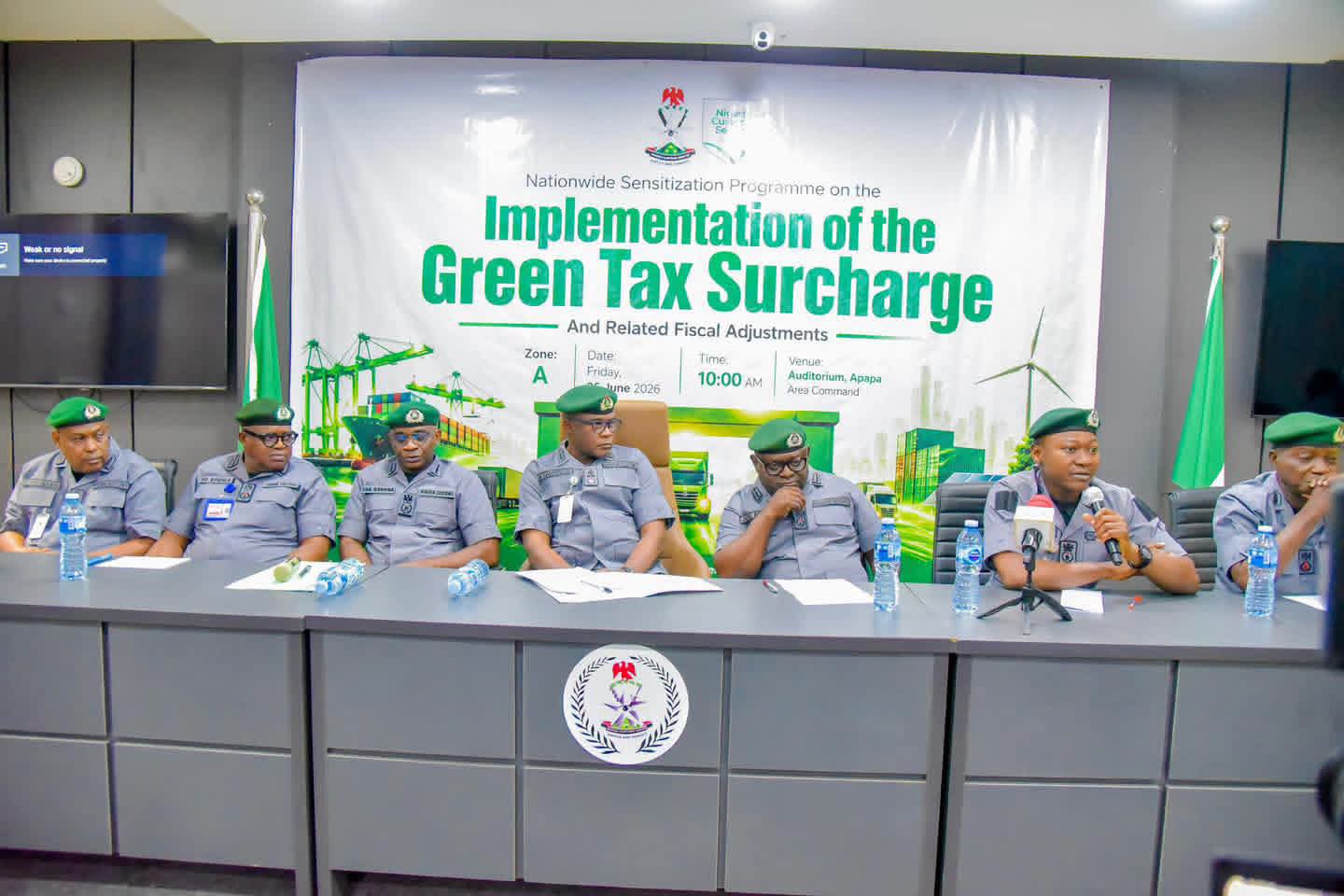
One of the most talked-about policy change under Nigeria’s 2026 Fiscal Policy Measures is the introduction of the Green Tax Surcharge on certain imported vehicles. While the fiscal policy contains several changes affecting import tariffs, machinery, customs procedures, and trade regulations, the Green Tax has attracted particular attention among vehicle importers because of its impact on the overall cost of importing cars into Nigeria.
What Is the Green Tax?
The Green Tax is an environmental surcharge designed to encourage the importation of cleaner, more fuel-efficient vehicles while discouraging the importation of larger, higher-emission vehicles.
Under the proposal:
– Vehicles with engine capacities below 2,000cc are generally exempt.
– Vehicles above 2,000cc attracts a Green Tax ranging from 2% to 4%, depending on engine capacity and the applicable customs classification.
The policy forms part of the Federal Government’s broader environmental and fiscal reform agenda.
Will Vehicle Importation Become More Expensive?
Not necessarily. One important aspect that many importers overlook is that the Green Tax Surcharge is accompanied by reductions in existing vehicle import levies. The proposed changes include:
– Reduction of levy on brand-new vehicles from 20% to 10%.
– Reduction of levy on used (Tokunbo) vehicles from 15% to 5%.
As a result, the lower import levies offsets some or all of the Green Tax Surcharge for certain vehicles. The overall financial impact will therefore depend on the vehicle’s engine capacity, classification, and applicable customs assessment.
Other Fiscal Measures That May Affect Importers
Beyond vehicle importation, the 2026 Fiscal Policy Measures also propose:
– Lower or zero-rated tariffs on selected machinery, agricultural equipment, renewable energy components, and electric vehicles.
– Expansion of the import prohibition list for certain goods.
– Additional customs and trade reforms intended to improve industrial growth and trade administration.
This implementation demonstrate a broader effort to encourage local production while promoting cleaner technologies and more efficient trade practices.
What Should Importers Do Now?
Now that the measures are fully implemented, importers should continue planning based on the current customs framework while staying informed about official implementation notices. In Summary, the total reduction as a result of the new implementation is about 6% in total. Because an existing levy of 15% is reduced to 5% while a new 4% Green Tax Surcharge is implemented.
For those planning to import vehicles, it is advisable to:
– Confirm the engine capacity of the intended vehicle.
– Review the estimated landed cost under the proposed policy.
– Verify the applicable customs charges before shipment.
Early planning can help importers make informed purchasing decisions and avoid unexpected costs.
Final Insight
The Green Tax should not be viewed in isolation. It forms part of a wider package of fiscal reforms that combines environmental objectives with adjustments to existing import duties and levies. As implementation now in full force, understanding the complete cost structure and not just the Green Tax itself will be essential for anyone planning to import vehicles and machineries into Nigeria.
If you’re planning to import a vehicle into Nigeria and would like guidance on customs valuation, applicable duties, or the possible impact of the proposed Green Tax, visit our Import Services page for practical information on vehicle importation and customs clearance.