For many years, discussions about smuggling at Nigeria’s ports were largely associated with prohibited consumer goods such as rice, vegetable oil, frozen poultry, used clothing and vehicles.
However, recent seizure records from Nigerian ports show that the nature of maritime smuggling has become considerably more complex. Customs operations have increasingly uncovered consignments involving narcotics, counterfeit and expired pharmaceutical products, firearms and ammunition. This development is important not only from a security and public-health perspective, but also for legitimate businesses involved in Nigerian imports and exports.
Smuggling Is Becoming More Complex
Recent enforcement operations reported by the Nigeria Customs Service have involved significant quantities of tramadol, codeine, cannabis, cocaine and pharmaceutical products, alongside firearms and ammunition.
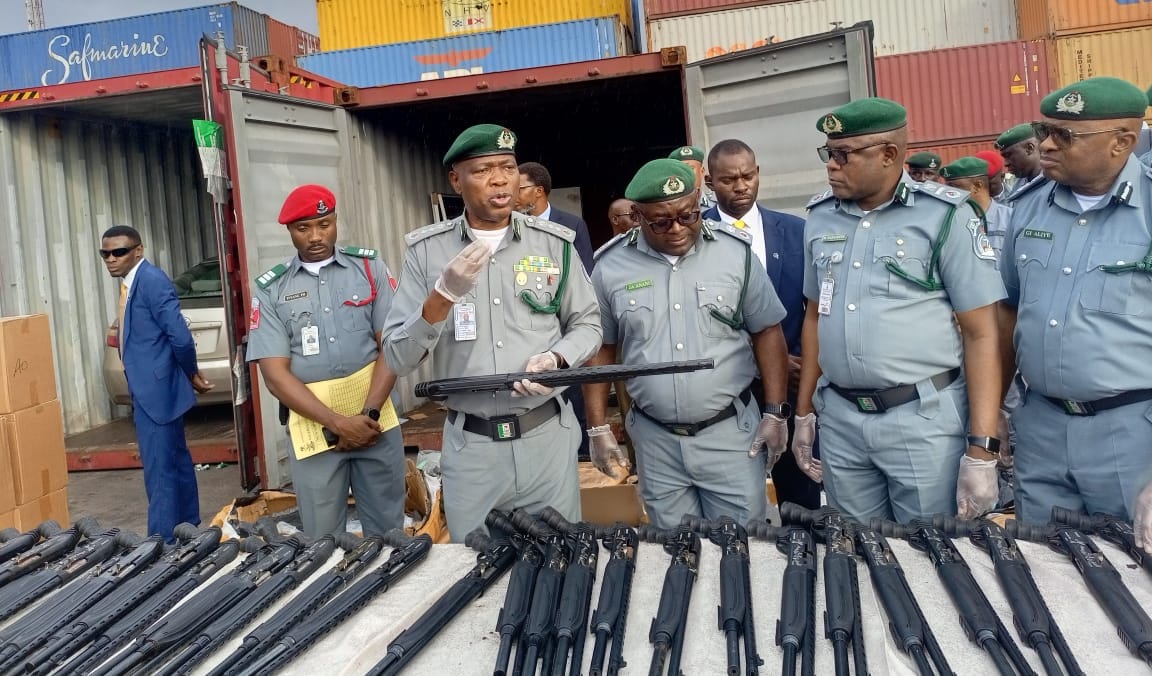
One of the most serious recent interceptions occurred at Tin Can Island Port, where Customs reportedly seized a container containing 399 fully assembled pump-action rifles and 535 firearm components. Other major seizures have involved large quantities of narcotics and pharmaceutical products.
The significance of these seizures goes beyond the financial value of the cargo. While conventional smuggling can result in revenue losses and unfair competition for legitimate businesses, illicit drugs and firearms introduce much broader public-health and national-security risks.
Why Legitimate Importers Should Pay Attention
The changing nature of smuggling means Customs enforcement is increasingly focused on identifying high-risk consignments, rather than simply checking whether import duty has been paid. This makes accurate cargo declarations and proper documentation particularly important for legitimate importers.
Importers should ensure that:
– The description of goods accurately reflects the actual cargo.
– Required permits and regulatory approvals are obtained where applicable.
– Shipping documents are complete and consistent.
– Customs declarations correspond with the physical contents of the shipment.
– Restricted or regulated products are properly declared and approved before shipment.
An inaccurate declaration can create serious complications if the physical contents of a container differ materially from what was declared.
The Growing Role of Intelligence and Technology
The Nigeria Customs Service has increasingly emphasized intelligence-led enforcement, risk management, digitalization and cooperation with other government agencies. The purpose is not simply to inspect more containers. With the volume of cargo moving through Nigerian ports, physically examining every shipment would create additional delays for legitimate trade.
Instead, risk-based systems allow Customs to identify consignments that may require closer examination while facilitating legitimate cargo. The development of digital Customs systems such as B’Odogwu is part of this wider transformation, aimed at improving automation, transparency and risk management.
Trade Facilitation and Enforcement Must Work Together
For legitimate importers, stronger enforcement should not necessarily mean more difficulty in clearing cargo.
Ideally, better risk management should allow Customs to concentrate attention on suspicious shipments while legitimate and properly documented cargo moves through the clearance process more efficiently.
This distinction is increasingly important as Nigeria seeks to improve its ports, encourage international trade and strengthen its position within regional and global supply chains.
What This Means for Importers
The recent seizures are a reminder that Customs compliance should not be treated as an afterthought. For businesses importing containers, machinery, vehicles, raw materials or general cargo, proper preparation before vessel arrival can help reduce avoidable complications during clearance.
The objective should be straightforward: declare accurately, obtain the required approvals, prepare the documentation and ensure the cargo complies with Nigerian import regulations.
Final Insight
The evolution from traditional prohibited imports to increasingly sophisticated consignments of narcotics, pharmaceuticals and firearms demonstrates why modern Customs enforcement is becoming more intelligence-driven. For legitimate businesses, this reinforces the importance of working within the proper import and clearance framework.
At Clearcargonigeria Limited, we assist importers with customs documentation, valuation, clearance and cargo logistics, helping ensure that shipments are properly prepared for the clearance process.