Customs Exempts Raw Materials & Spare Parts from 4% Levy to Boost Manufacturing

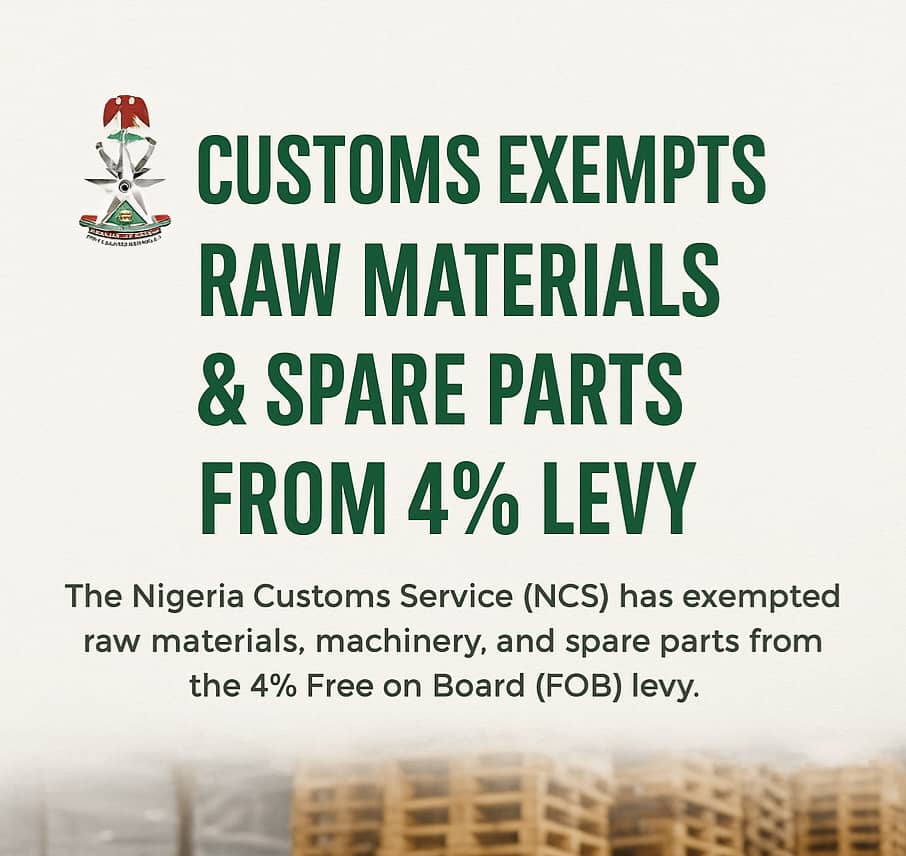
The Nigeria Customs Service (NCS) has announced that manufacturers importing raw materials, machinery, and spare parts will be exempt from the controversial 4% Free on Board (FOB) levy. This measure aims to ease operating costs in the industrial sector and strengthen domestic production.
What the Exemption Covers & Why It Matters
The exemption applies specifically to goods classified under Chapters 98 and 99 of the Customs Tariff—sectors often used for machinery, specialized components, and related spare parts.
Beyond manufacturers, the waiver also includes imports for government projects with duty exemption certificates, humanitarian goods, healthcare imports, and commercial airline spare parts.
For manufacturers not yet listed under these tariff chapters, NCS is set to fast-track their inclusion through a tripartite consultation involving the Finance Ministry, NCS, and the Manufacturers Association of Nigeria (MAN).
Importantly, any payments made earlier under the 4% levy by affected manufacturers will be credited toward future transactions.
Broader Implications for Trade & Industry
This exemption is a positive move for Nigerian imports and exports, especially for local manufacturers who rely on imported machinery and spare parts. By reducing the cost burden, it could help improve competitiveness, lower production costs, and encourage growth in manufacturing output.
However, the real impact depends on how efficiently the exemption is implemented: Will the onboarding process for manufacturers under Chapters 98/99 be smooth and timely?
Can NCS ensure transparency and prevent abuse of the exemption?
Will the move translate into real gains for production scale, quality, and export capacity?
For imports clearing agents in Nigeria, and other logistics players, this policy shift could ease some pressure. It may also influence shipping quotations in Nigeria and recalibrate how costs are passed along in the value chain.
Conclusion
The exemption of raw materials, machinery, and spare parts from the 4% FOB levy is a strategic relief for manufacturers and businesses that depend on imported inputs. By lowering costs at the clearance stage, it could improve efficiency, strengthen local production, and make Nigeria more competitive in the global market.
As Nigeria marks another Independence Day, this reform is a reminder of the importance of building a stronger, self-reliant economy through supportive trade policies. For businesses planning their next shipment and seeking clarity on how these changes affect total costs, you can request a tailored estimate through our QuickQuote page.