Inside Nigeria’s Historic Trade Deal With the UAE – Benefits, Effective Date and What It Means for Exporters

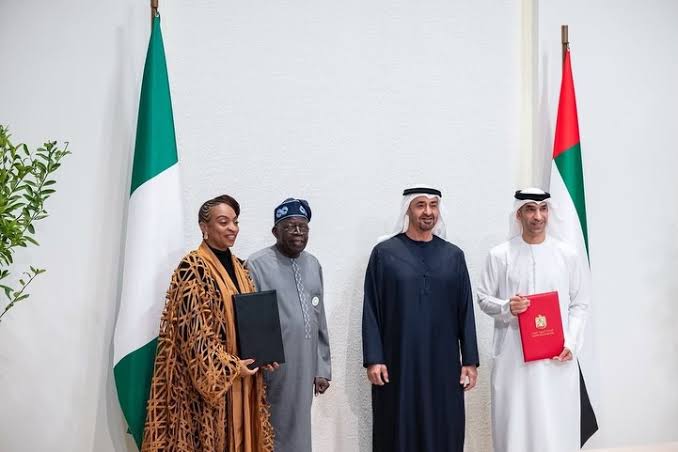
Nigeria and the United Arab Emirates (UAE) recently formalised a landmark Comprehensive Economic Partnership Agreement (CEPA) aimed at dramatically boosting trade between both countries, particularly in non-oil exports and goods with competitive advantage. The agreement was signed in January 2026 during the Abu Dhabi Sustainability Week Summit and represents one of Nigeria’s most significant bilateral economic pacts to date.
What the Deal Does and When It Takes Effect
The CEPA between Nigeria and the UAE came into force soon after its signing in January 2026, with implementation beginning immediately for many tariff lines. This means that a wide range of Nigerian products can enter the UAE market duty-free from the start, while additional goods are scheduled for phased tariff elimination over the next few years.
The agreement sets out a clear timetable: Immediate tariff removal on thousands of products upon entry into force. Further tariff eliminations scheduled over three to five years for other categories. This allows exporters and logistics partners time to plan, adapt and maximise the advantages afforded by the new trade framework.
📌 What goods benefit from the deal?
The Comprehensive Economic Partnership Agreement (CEPA) between Nigeria and the United Arab Emirates (UAE) eliminates tariffs on 7,315 Nigerian products exported to the UAE and phases out tariffs on others over time. These include:
➡️ Immediate duty-free access goods:
-Fish and seafood
-Oil seeds and cereals
-Live animals and meat products
-Fruits and nuts
-Leather, cotton, and vegetable textile fibres
-Pharmaceutical products and chemicals
-Paper and paperboard products
-Printed materials : These goods enter the UAE market without tariffs right away, giving Nigerian exporters a much stronger competitive edge.
➡️ Goods benefiting over the next 3–5 years (phased tariff elimination):
-Cocoa and cocoa preparations
-Coffee, tea, spices, oils, fats
-Machinery and electrical equipment
-Vehicles and automotive parts
-Apparel, furniture, footwear, ceramics, and glass products : These products will see tariffs removed gradually, expanding duty-free access as the agreement is implemented.
Many of these goods qualify for immediate duty-free access, while others will see tariffs phased out gradually, making exports more competitive and cost-effective.
These expanded market access opportunities are expected to give a boost to Nigerian exports of agro-produce and industrial goods, helping exporters diversify beyond traditional markets and navigate international freight forwarding more strategically.
Strategic Implications for Trade & Logistics
For Nigeria’s export ecosystem – including clearing agents in Nigeria, freight forwarding agents in Nigeria, and shipping agents in Nigeria – the CEPA offers clear logistical and commercial incentives. As tariff barriers fall, trade flows are likely to increase, which has several downstream effects:
-Higher demand for shipping services and cargo movement
-More volume for clearing containers in Nigeria and export shipments
-Growth in exports that require multi-modal logistics solutions
-Increased opportunities for international freight forwarding cooperation between Nigeria and Middle Eastern markets
This strategic pact not only expands access for specific products but also positions Nigeria as a stronger player in global trade networks. As businesses prepare to take advantage of duty-free access, efficient logistics, compliance, and market knowledge become even more critical.
For Nigeria’s agricultural exporters – particularly those focused on these key commodities, this deal creates a more favourable export environment with reduced trade costs and new customer bases.
Broader Economic Context
The CEPA is aligned with Nigeria’s broader efforts to diversify its export base, strengthen non-oil revenue streams, and deepen global economic integration. With the nation recording notable gains in non-oil export performance, including increased volumes and revenue in agricultural and processed products – the UAE partnership could reinforce these trends and expand Nigeria’s export footprint.
Conclusion
The Nigeria–UAE Comprehensive Economic Partnership Agreement is a transformative development for Nigerian exporters and the country’s trade ecosystem. With duty-free access for thousands of products and a clear implementation timeline, businesses have a unique opportunity to scale into Middle Eastern and global markets.
Whether you’re exporting agricultural produce, manufactured goods, or exploring how to ship your goods in Nigeria competitively, understanding and leveraging this trade deal is crucial. For export planning and tailored logistics support, visit our Export-Services page to see how Clearcargonigeria can help streamline your international trade journey.
Reference: This article is based on reporting on Nigeria’s trade agreement with the UAE’s Comprehensive Economic Partnership Agreement between Nigeria and the UAE.