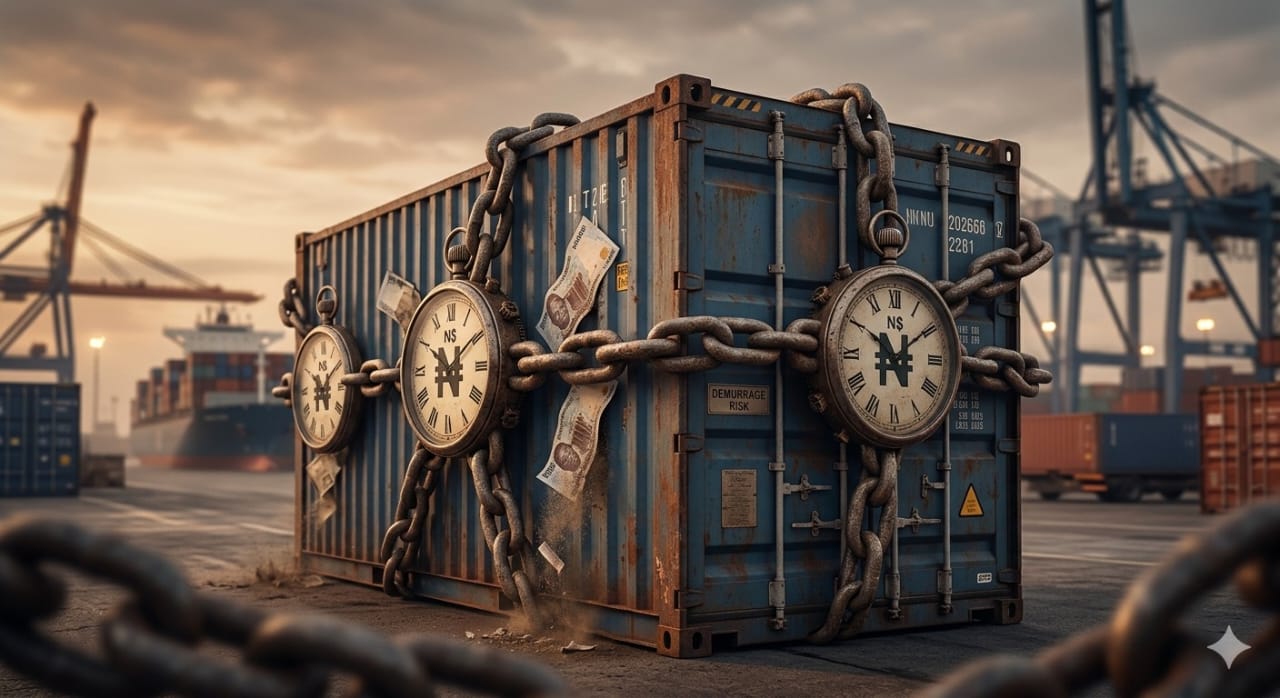
Many importers spend considerable time negotiating product prices, freight costs, and customs duty, yet overlook one of the most expensive risks in cargo importation: demurrage charges.
In practical port operations, demurrage is often the hidden cost that transforms an otherwise profitable shipment into an unexpected financial burden. Understanding how demurrage works, why it occurs, and how to minimize it is essential for anyone involved in importing vehicles, containers, machinery, raw materials, or general cargo into Nigeria.
What Is Demurrage?
Demurrage refers to charges incurred when a shipment remains at the port, terminal, or under a shipping company’s custody beyond its allowed free period.
Simply put: The longer a shipment remains uncleared, the more charges begin to accumulate and increases over time. Whether it is a vehicle imported through RoRo services or a containerized shipment, delays can quickly increase the overall cost of importation.
The Reality of Free Days/Period
Many importers assume that free days provide sufficient time to complete clearance. In reality, this is not always the case. For many vehicle imports and cargo shipments, the initial free period may begin immediately after vessel arrival.
However, clearance activities often cannot proceed fully until:
- The cargo has been discharged from the vessel
The shipment has been allocated to an examination location
Customs inspection arrangements have been made
As a result, part of the free period may be consumed by operational processes outside the control of both the importer and the clearing agent.
Why Demurrage Happens
Three major factors contribute to demurrage accumulation.
1. Under-Preparation: This remains the most preventable cause.
- Examples include:
Delayed PAAR/Pre-Arrival Documentation processing
Incomplete shipping documents
Late duty payment
Insufficient funding arrangements
Failure to commence documentation early
Many of these challenges can be reduced through proper planning and pre-arrival documentation.
2. Logistics Delays: Even after clearance has been completed, cargo evacuation may still face delays.
- Common examples include:
Truck shortages
Traffic congestion
Terminal operational bottlenecks
Delays in container positioning
These factors can affect cargo movement despite successful customs processing.
3. System Downtime and Operational Interruptions: Import clearance increasingly depends on electronic systems. When networks slow down or systems experience downtime, processing activities may be delayed. While these situations are usually temporary, they can affect clearance timelines and contribute to demurrage exposure.
Container Imports and Additional Exposure
For containerized cargo, the challenge extends beyond terminal charges. Shipping lines often require a container deposit, which serves as security for the return of the container. Once the free return period expires, charges may begin to apply against the deposit. Where delays become excessive and the container remains unreturned, additional liabilities may arise and could affect future transactions with the shipping line. This makes timely cargo evacuation especially important for container shipments.
When Demurrage Becomes a Serious Risk
If a shipment remains uncleared for an extended period, it may eventually enter overtime status. At this stage, regulatory attention increases, and prolonged non-clearance can expose the cargo to auction procedures in accordance with applicable customs regulations.
For this reason, importers should never view demurrage as merely an inconvenience. It is a warning sign that immediate action is required.
Final Insight
Demurrage is not just a port charge it is often the result of delays, under preparation, and missed timelines. While it may not always be possible to eliminate demurrage completely, proper planning, timely documentation, and efficient clearance can significantly reduce exposure and protect importers from unnecessary costs. Successful importation is not only about paying duty; it is also about managing time effectively.