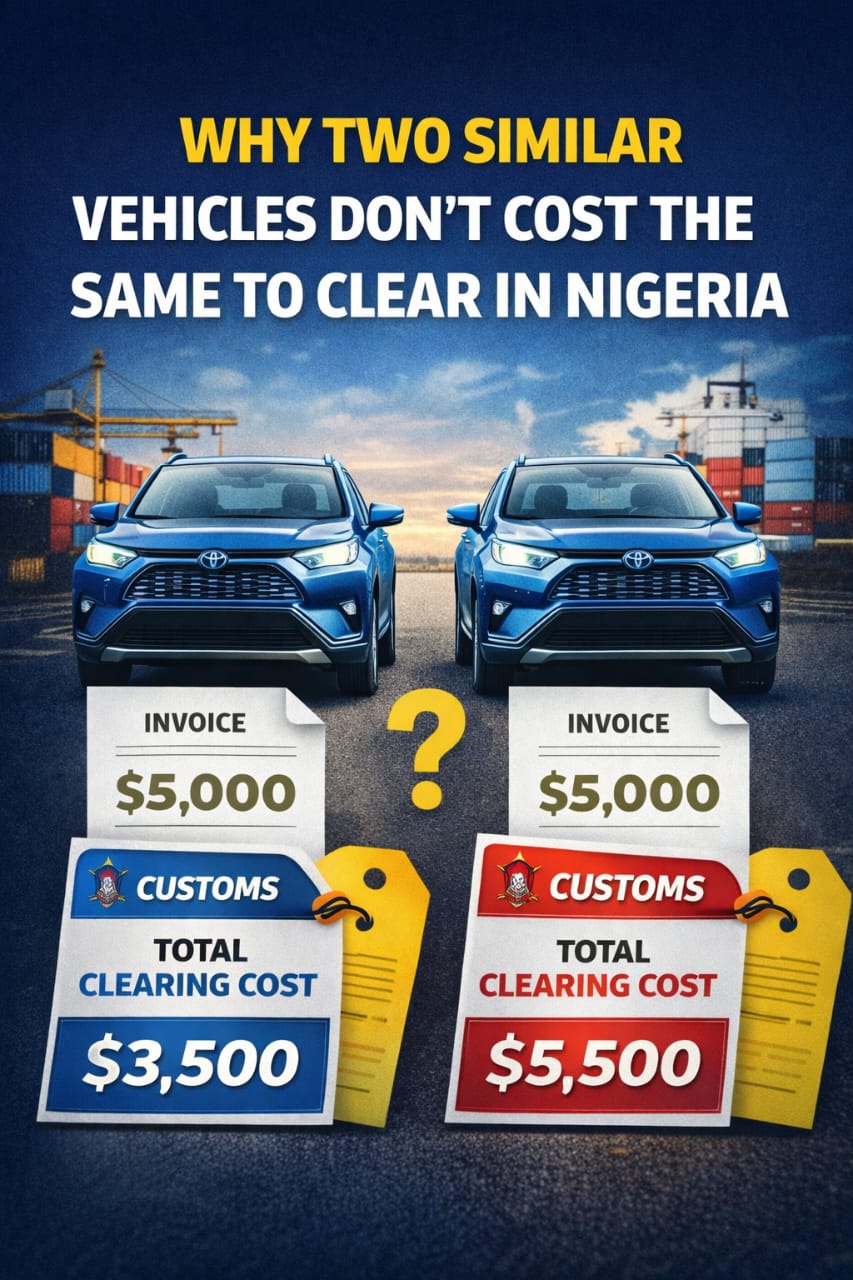
For many importers, the assumption is simple: “If two vehicles are the same, the clearing cost should be the same.”
In reality, that is rarely the case.
From years of handling vehicle importation, one thing is clear vehicle clearing cost in Nigeria is influenced by multiple factors beyond just the purchase price or shipping fee.
Understanding these factors can help you plan better, avoid surprises, and make more informed import decisions.
How Customs Determines Vehicle Valuation
When a used vehicle arrives in Nigeria, the Nigeria Customs Service does not rely solely on the purchase invoice. Instead, vehicles are assessed based on standard market benchmark values.
For example: A vehicle worth $5,000 may have its duty calculated based on that benchmark value. However, in practice, there are situations where this valuation can be reviewed and adjusted depending on documentation, shipment details, and engagement process.
And when valuation is adjusted downward, the effect is significant.
Why Valuation Directly Affects Your Total Cost
Duty is not the only cost tied to vehicle valuation. A lower assessed value also reduces:
– Duty payable
– VAT calculations
– Other associated levies
So, when valuation is reviewed successfully, it doesn’t just reduce duty, it reduces the overall clearing cost. This is one of the key reasons why two similar vehicles can end up with different final costs.
The Overlooked Factor: Customs Vehicle Terminal Differences
One important factor many importers are unaware of is the terminal where the vehicle is processed in Nigeria.
Every vehicle, whether shipped via RoRo or container is assigned to a terminal where:
– Customs valuation is carried out
– Physical inspection takes place
– Release is authorized
While customs procedures are generally uniform, the operational environment differs across terminals.
In practical terms:
– Different terminals have different customs personnel
– Documentation handling may vary slightly
– Valuation review outcomes are not always identical
As a result: Two identical vehicles cleared at different terminals may not attract exactly the same duty outcome. This is not about inconsistency, it is about operational realities within a complex port system.
The Role of Shipment Method in Cost Structure: Another major factor that affects total import cost is the mode of shipment.
Used Vehicles RoRo Shipping (Roll-On/Roll-Off)
RoRo is generally the more cost-effective option for vehicle importation. It eliminates several cost components such as:
– Container freight
– Container handling charges
– Haulage tied to container movement after arrival
This makes it ideal for single vehicle imports. Commonly used RoRo shipping lines include:
– Grimaldi Lines
– Sallaum Lines
However, due to vessel handling conditions, vehicles shipped via RoRo may occasionally have minor surface marks or scratches. Except when shipped via these recommended shipping line. Alternatively, you can request to have the RoRo unit shipped as a VIP – Although, extra costs will apply but extra handling care will suffice.
Containerized Used Vehicle Shipments
Container shipping, while more controlled, comes with additional cost layers:
– Container freight
– Haulage charges
– Container Terminal handling fees
These costs do not apply to RoRo shipments, which is why container imports are typically more expensive. However, containers are often used when:
– Shipping multiple vehicles
– RoRo access is limited at the port of loading
– Additional goods are being consolidated
Why You Must Confirm Shipment Mode Before Requesting a Quote
One common mistake importers make is requesting a clearing quotation without confirming the shipment method.
This leads to inaccurate expectations because:
– RoRo and container shipments have different cost structures
– Clearing procedures differ
– Additional charges may apply depending on the mode of shipping
To get an accurate quotation, always confirm with your supplier or shipper first whether the vehicle is being shipped via RoRo or container.
What the Importation Process Looks Like
Once a vehicle is purchased, the importation process typically follows this sequence:
– Vehicle pickup by the shipper
– Movement to port of loading
– Shipment to Nigeria
– Customs valuation upon arrival
– Physical Customs inspection
– Duty payment and release
Although this appears straightforward, timelines can vary due to documentation readiness, port conditions, or system delays.
Expected Clearance Timeline
Based on practical experience:
– RoRo shipments: 2–5 working days after arrival
– Containerized shipments: 5–10 working days after arrival
These timelines may vary depending on operational conditions.
Basic Requirements for Clearing Used Vehicles In Nigeria
To clear a used vehicle in Nigeria, the key documents required are:
– Bill of Lading or Telex Release
– Valid identification of the consignee
Ensuring accuracy in these documents is essential for a smooth process.
Final Insight
Vehicle importation in Nigeria is not just about buying and shipping, it is about understanding how different factors influence your final cost. From valuation to shipment method and even the terminal of clearance, each step plays a role in determining what you eventually pay. The more informed you are before shipment, the smoother and more predictable your import process will be. There is no one-size-fits-all cost when it comes to vehicle importation.
Each shipment is shaped by its own combination of variables. If you are planning to import a vehicle and want clarity on the most suitable shipping option, you can explore our RoRo or Containerized Shipping Services pages to better understand what works best for your situation.